
Essential Overlanding Gear Checklist 2026

Table of Contents
- What Makes an Overlanding Gear Checklist Essential
- Best Overlanding Recovery Gear
- Overlanding Vehicle Preparation Checklist
- Shelter, Water, and Cooking Systems
- Navigation, Communication, and Safety Gear
- How to Pack for an Overlanding Trip
- Post-Trip Maintenance and Sustainable Overlanding
- Your Complete Overlanding Gear Setup Starts Here
- Frequently Asked Questions
Last Updated: September 3, 2026
What Makes an Overlanding Gear Checklist Essential
An overlanding gear checklist is a comprehensive inventory of vehicle modifications, recovery equipment, shelter systems, and safety tools designed to support self-sufficient travel in remote terrain. It separates casual road trips from true expeditions, the difference between being stranded and being prepared.
A proper overlanding gear checklist ensures your vehicle, body, and team can handle days or weeks without resupply. The stakes are real: a broken suspension on a remote trail means multi-day recovery, a dead battery means no communication or power, and a failed shelter becomes dangerous quickly.
What makes this checklist different from generic camping lists is its focus on vehicle reliability and self-recovery capability. You're operating a mobile base camp in terrain where help isn't minutes away, it's days away. That context shapes everything: your recovery gear, power systems, communication tools, and weight distribution strategy.
Best Overlanding Recovery Gear
Recovery gear separates overlanders from tourists. When your vehicle is stuck, recovery equipment determines whether you self-rescue or call for expensive external help.
Winch and Kinetic Rope Systems
A winch mounted to your front bumper provides mechanical advantage to extract your vehicle from deep trouble. Winches rated 8,000 to 12,000 pounds of pulling force handle most mid-size 4x4 trucks effectively (sae.org).
Kinetic ropes differ fundamentally from steel cables. A kinetic rope stretches under load, absorbing energy like a shock absorber. This elasticity reduces shock loads on your vehicle frame and winch motor. Steel cables snap suddenly when they fail; kinetic ropes degrade gradually, giving you warning. A kinetic rope system prevents catastrophic failure that sends cable fragments flying at lethal speed.
Pair your winch with proper rigging: snatch blocks for mechanical advantage, tree straps for anchor points, and shackles rated for your winch capacity.
Traction Boards and Air Compressor
Traction boards (recovery boards or sand ladders) provide grip when your tires lose traction in sand, mud, or snow. Two boards typically cost less than a winch and solve problems winches can't, like getting unstuck from soft sand without mechanical advantage.
An air compressor is underrated recovery gear. Deflating your tires increases the contact patch, improving traction dramatically in soft terrain. A portable air compressor lets you re-inflate at the trailhead. Tire pressure monitoring systems help you track pressure changes and catch slow leaks before they strand you.
Overlanding Vehicle Preparation Checklist
Your vehicle is your lifeline. Mechanical reliability in remote terrain isn't optional, it's survival.
Suspension, Tires, and Mechanical Reliability
Suspension upgrades handle rough terrain more effectively than stock systems. Lifted suspensions increase ground clearance, reducing high-centering risk. Upgraded shocks absorb impacts from washboard roads and rocky terrain.
All-terrain tires balance on-road comfort with off-road capability, while mud-terrain tires prioritize grip in extreme terrain. Tire size affects payload capacity; larger tires reduce your vehicle's available weight budget for gear.
A tire repair kit addresses punctures without removing the wheel. Carry a spare tire mounted externally; a second flat leaves you stranded if you only have one spare. Mechanical reliability starts with pre-trip maintenance: change your oil, top all fluids, inspect belts and hoses, and test your cooling system.
Dual Battery System and Power Management
A dual battery system adds a second battery dedicated to auxiliary loads without draining your starter battery. A battery isolator automatically charges the auxiliary battery when the engine runs, then isolates it when the engine shuts off.
Solar panels extend your power autonomy indefinitely. A 100-watt rooftop solar array generates 400-600 watt-hours on a sunny day, enough to run a small fridge and charge devices. A portable power station (500-2000 watt-hour capacity) provides emergency power when batteries run low.
Power management means knowing your consumption. A 12-volt fridge draws 30-50 amps per day (peer-reviewed research). Budget your power use against your available capacity; overestimating power generation leads to dead batteries and dead communication.
Shelter, Water, and Cooking Systems
Comfort and safety depend on reliable shelter, clean water, and hot meals.
Shelter and Sleeping Systems
A rooftop tent mounts to your vehicle's roof rack, providing elevated sleeping space that keeps you off damp ground and away from ground-level insects. Most deploy in under two minutes.
Ground tents offer flexibility: you can camp away from your vehicle and explore on foot. A quality three-season tent handles wind, rain, and temperature swings. Sleeping bags rated for your expected temperatures prevent hypothermia; a bag rated 20°F provides comfort down to around 20°F. Sleeping pads insulate you from ground cold and add comfort.
Water Storage and Filtration
Water weighs 8.3 pounds per gallon. Water purification lets you refill from natural sources, dramatically reducing weight. A gravity-fed water filter removes bacteria and protozoa from streams and lakes. Collapsible water containers store compactly and expand when filled.
Water storage in your vehicle prevents dehydration on long driving days. A gallon per person per day covers drinking, cooking, and basic hygiene. In hot terrain, increase that to two gallons per person.
Camp Kitchen and Refrigeration
A portable camp stove runs on propane or white gas and provides cooking capability without fire. A 12-volt portable fridge keeps perishables fresh and provides cold water on hot days. Fridge capacity ranges from 20 to 60 liters; larger fridges draw more power but let you carry more food variety.
Cooking utensils should nest compactly. Titanium cookware weighs less than steel but costs more. Cast iron is heavy but nearly indestructible.
Navigation, Communication, and Safety Gear
In remote terrain, navigation and communication are survival systems.
Off-Road Navigation and Satellite Messaging
GPS navigation software like Gaia GPS or OnX Maps lets you download offline maps before departure, ensuring navigation without cellular service. A satellite messenger sends text messages and location data via satellite when cellular service fails, providing two-way communication with emergency services.
Traditional paper maps and a compass provide navigation backup when electronics fail. Know how to read topographic maps and use a compass.
First Aid and Emergency Beacon
A comprehensive first aid kit addresses injuries from minor cuts to serious trauma. Include bandages, pain relievers, anti-diarrheal medication, blister treatment, and trauma supplies like tourniquets and gauze pads. A personal locator beacon sends a distress signal to search and rescue when activated.
Wilderness first aid training teaches you to handle medical emergencies hours from professional help.
How to Pack for an Overlanding Trip
Packing strategy determines whether your overlanding gear checklist becomes a functional system or a chaotic jumble.
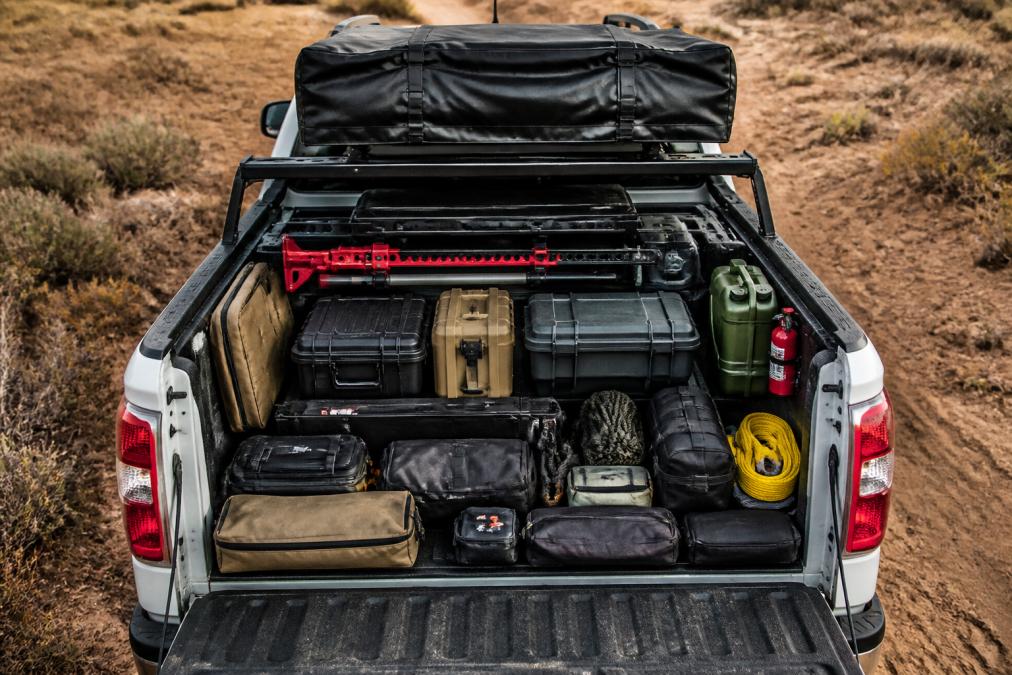
Weight Distribution and Payload Capacity
Your vehicle has a maximum payload capacity, the total weight it can safely carry. Exceed this limit and you risk suspension damage, brake failure, and loss of control. Check your vehicle's door jamb placard for exact capacity.
Heavy items (water, tools, batteries) go low and centered over the rear axle. Light items (sleeping bags, clothing) go higher and forward. This distribution keeps your center of gravity low and prevents the vehicle from becoming top-heavy on uneven terrain.
Payload capacity limits your overlanding gear checklist. A small SUV might carry 1,000 pounds; a heavy-duty truck might carry 3,500 pounds. Prioritize recovery gear and safety equipment over comfort items.
Gear Organization and Leave No Trace Principles
Organized gear storage makes camp setup fast and keeps essential items accessible. Modular storage boxes stack efficiently and protect contents from dust and weather.
Leave No Trace principles minimize your environmental impact. Pack out all trash, including food scraps. Use biodegradable soap for washing. Camp at least 200 feet from water sources (lnt.org). Stay on established trails to prevent vegetation damage. Sustainable overlanding preserves wilderness character and protects trails for future overlanders.
Post-Trip Maintenance and Sustainable Overlanding
Your overlanding gear checklist doesn't end when you return home. Rinse your vehicle thoroughly to remove salt, mud, and debris that accelerate corrosion. Check all fluid levels and inspect suspension components, tires, and undercarriage for damage.
Clean and dry all gear. Mold grows quickly in damp fabric; air-dry tents and sleeping bags completely before storage. Inspect recovery gear for damage; a frayed kinetic rope or bent shackle should be replaced.
Support trail maintenance organizations that keep access roads passable. Respect private property and access rules. Advocate for public land management that balances recreation with conservation. Maintain your vehicle's mechanical systems religiously through regular oil changes, fluid checks, and component inspection.
Your Complete Overlanding Gear Setup Starts Here
Building a complete overlanding gear checklist takes time and investment. You don't need everything at once; prioritize recovery gear and vehicle reliability first, then add comfort systems as your budget allows.
Adjust your gear list based on real experience. Start with recovery gear: a winch, kinetic rope, traction boards, and an air compressor. Add a dual battery system and basic shelter. Build from there as your skills and confidence grow.
Frequently Asked Questions
What are the absolute essentials for an overlanding trip?
An essential overlanding gear checklist must include recovery equipment (winch, kinetic rope, traction boards), navigation tools (GPS, satellite messenger), water filtration, shelter system, first aid kit, tire repair supplies, and dual battery power. Your vehicle also needs mechanical reliability checks: suspension upgrades, tire pressure monitoring, and air compressor. The specific items depend on trip length and terrain, but these categories cover survival, recovery, and navigation in remote areas.
How do I know if overlanding recovery gear will fit my smaller 4x4 vehicle?
Recovery gear compatibility depends on your vehicle's payload capacity and mounting points. Winches typically range from 8,000 to 12,000 pounds and mount to front bumpers. Traction boards fit under most vehicles, and tire repair kits are universal. Check your vehicle's payload rating in the owner's manual, this determines total weight you can carry safely. Smaller vehicles like a Toyota 4Runner can run a full overlanding setup by distributing weight across roof, bed, and interior storage rather than concentrating it in one area.
What's the difference between overlanding and standard camping?
Overlanding uses a vehicle as your base camp and means of transportation across remote terrain, often covering hundreds of miles. Standard camping typically involves driving to a fixed campground. Overlanding requires vehicle-specific gear: recovery systems, dual battery setups, off-road navigation software, and mechanical backup systems. You also need self-sufficiency for water, power, and repairs since you're traveling where services don't exist. The gear checklist reflects this independence, overlanding demands more robust equipment and redundancy.
How do I organize gear to avoid exceeding my vehicle's payload capacity?
Start by knowing your vehicle's payload limit (found in the owner's manual or door jamb). Distribute weight low and centered: heavier items in the truck bed near the axles, lighter gear on roof racks. Use a weight distribution checklist, assign each item a weight estimate and track totals by location. Rooftop tents and solar panels go high, water and tools go low. Leave No Trace principles also apply: pack only what you'll use. Many overlanders find that multi-purpose gear (a shovel that's also a pry bar, a jerrycan that stores tools) reduces total weight while maintaining functionality.
What should I check on my vehicle before a long overlanding trip?
Your overlanding vehicle preparation checklist should cover: tire condition and pressure monitoring system, suspension (shocks, springs, bushings), fluids (oil, coolant, brake, transmission), battery and dual battery system, alternator output, brakes, and steering. Test your winch under load before departure. Inspect bumpers, skid plates, and recovery points for damage. Run your navigation software offline and verify satellite messenger batteries. Many overlanders complete a full mechanical inspection 2-3 weeks before departure to address issues before remote travel.
Why is a dual battery system important for overlanding?
A dual battery system keeps your auxiliary battery (powering camp lights, refrigeration, satellite devices, phone charging) separate from your starter battery. This prevents you from draining the engine battery and getting stranded. Modern overlanding setups often include solar panels and a portable power station that charge through the dual battery system, enabling off-grid living for days. Without it, you're limited to engine-running time for power, a significant constraint on multi-day trips in remote areas.
How do I balance comfort gear with weight limits on an overlanding trip?
Prioritize by trip length and terrain. A weekend trip near civilization can include a camp kitchen and refrigeration; a month-long remote expedition demands lighter, multi-purpose gear. Use this framework: survival gear (shelter, water, navigation, recovery) is non-negotiable. Comfort items (camp stove, cooler, extra clothing) scale with available payload. Digital nomad setups (laptop, power inverter, satellite internet) add 15-25 pounds but enable remote work. Many overlanders test comfort systems on short trips first, then refine based on actual use rather than assumptions.
Building your overlanding setup requires reliable, field-tested equipment you can trust when help is far away. OverlandRetail.com specializes in durable recovery gear, precision tire deflators, and camping essentials designed specifically for overlanding demands. Our curated selection ensures you get proven equipment built for the road less traveled, not generic camping gear that fails when conditions get serious. Explore our collection and get equipped for your next expedition with confidence.