
Is a Roof Rack Worth It for Overlanding?

Last Updated: November 6, 2026
Quick Summary
A roof rack is worth it only when you have genuinely run out of interior and bed space, since it works as a cargo multiplier rather than a default upgrade. It adds storage flexibility and mounting for a roof tent or awning, but also adds weight, drag, and wind noise to every mile you drive.
- Load your vehicle for a real trip first and spend the money on tires or recovery gear if everything fits inside.
- Dynamic load is the weight carried while moving, static load is the weight held when parked, and static ratings are always higher.
- Your vehicle's payload rating on the door jamb sticker is the real ceiling, not the rack's rating.
- A front wind fairing is the single most effective mitigation for the fuel penalty.
- A waterproof rooftop cargo bag adds 40 cubic feet of weatherproof space and costs far less than a rack.
Table of Contents
- The Real Question: Does a Roof Rack Earn Its Keep?
- Roof Rack Pros and Cons for Overlanding
- Overland Roof Rack Weight Capacity: Static, Dynamic, and Payload
- Roof Rack Fuel Economy Impact, Wind Noise, and Highway Handling
- Rack Types, Materials, and Accessory Fitment
- Roof Rack vs Hitch Rack for Overlanding
- When a Roof Rack Is Not the Answer
- Match the Rack to Your Vehicle and Trip Style
- Frequently Asked Questions
The Real Question: Does a Roof Rack Earn Its Keep?
For most overlanding builds, a roof rack is worth it only when you have genuinely run out of interior and bed space.
The decision comes down to math and honesty about your trips. If your cargo space already swallows your gear and passengers stay comfortable, a rack mostly adds cost and drag.
Below, we break down roof rack pros and cons for overlanding, the load numbers that actually matter, and when a hitch rack or a cargo bag may be the smarter buy.
Roof Rack Pros and Cons for Overlanding
The strongest case for a roof rack is vehicle utility: roof storage frees interior space so passengers ride comfortably and gear stays organized.
Pros:
- Frees interior cargo space for passengers and the dog
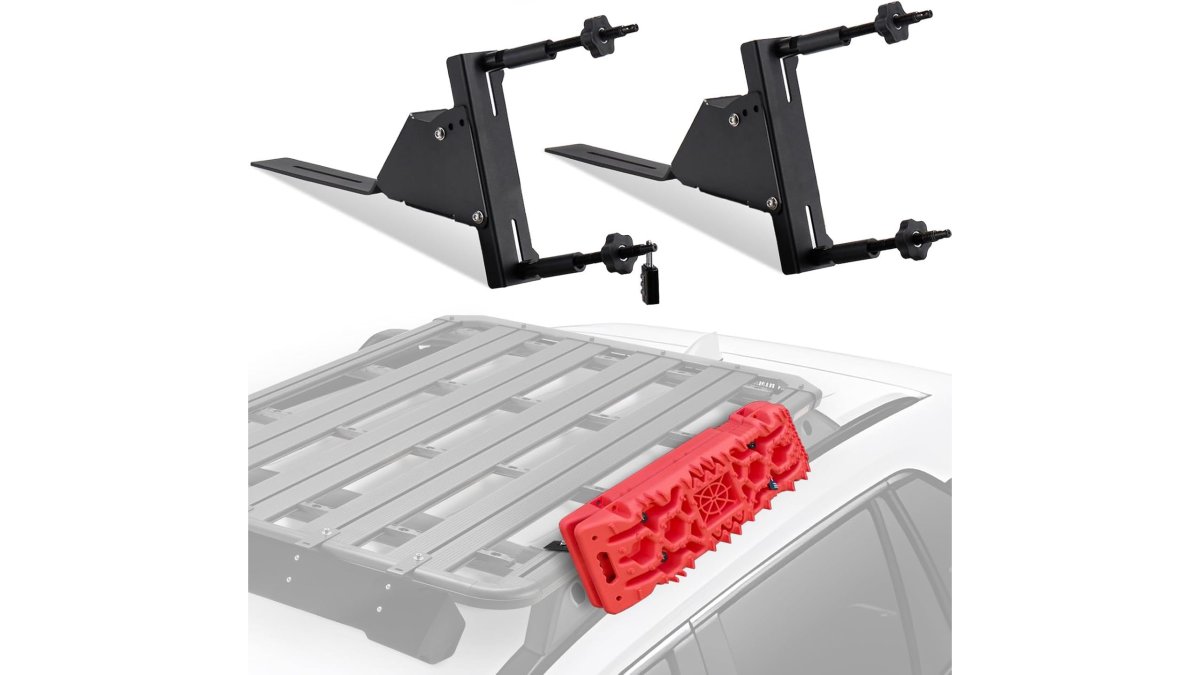
- Carries bulky gear like traction boards, fuel cans, and awnings
- Creates a mounting system for a roof tent and modular accessories
Cons:
- Adds rack weight and reduces your available payload
- Hurts fuel economy and adds wind noise at highway speed
- Raises your center of gravity, which changes vehicle handling
A common mistake is buying the rack before auditing what you actually carry. Load your vehicle for a real trip first. If everything fits inside, spend the money on tires or recovery gear instead.
Overland Roof Rack Weight Capacity: Static, Dynamic, and Payload
Load capacity is where most buyers get into trouble, because three different numbers govern what you can safely carry.
Dynamic load is the weight the rack carries while moving. Static load is the weight it holds when parked, such as two adults in a roof tent at camp. Static ratings are always higher because driving multiplies force through bumps and braking.
Why Static and Dynamic Loads Are Not the Same Number
A rack may carry a higher static rating than its dynamic rating. The Roof Rack Platform for the 2024-2026 Toyota Tacoma Double Cab is listed at 700 lb static and 400 lb dynamic load in carbon steel. Loading a rack to its static number and then hitting a washboard road can stress the rack and tent.
The Vehicle Limit Most Buyers Forget: Payload
The rack's rating is not the ceiling. Your vehicle's payload rating is. Subtract the rack itself, the tent, the gear, and your passengers from the payload figure on your door jamb sticker. The remainder is your real budget.
A 61 lb aluminum rack plus a roof tent plus a full cargo load can consume most of a smaller SUV's payload before anyone sits down.
Roof Rack Fuel Economy Impact, Wind Noise, and Highway Handling
Every roof rack carries an ownership tax: fuel economy, wind noise, and highway composure. Whether the penalty changes how you use the vehicle depends on rack height above the roof, frontal area, wind fairing, and how much gear stays mounted between trips.
What Actually Drives the Fuel Penalty
A roof rack hurts fuel economy by disturbing the airflow that normally slides over the roof and down the rear glass.
A front wind fairing is the single most effective mitigation, deflecting air up and over the rack and load.
The penalty is smallest on a low-profile fairing-equipped platform carrying light, low gear and largest on a tall basket carrying a rooftop tent and fuel cans.
Wind Noise: Where It Comes From and How to Cut It
Wind noise is generated at every edge that interrupts smooth airflow: the leading edge of the rack, the gaps between crossbars, the underside of a basket, and any strap, board, or can that sticks up.
Practical noise reduction: keep the fairing installed, remove the rack when it is not in use, and avoid loose straps or empty mounts that flutter.
Highway Handling and Center of Gravity
Weight up high raises your center of gravity, changing how the vehicle feels in corners, in crosswinds, and under braking.
Keep heavy items low and forward on the rack, and keep the heaviest cargo inside the vehicle.
Watch out: a loaded roof rack changes braking distance and emergency-lane-change behavior, so do not treat highway handling as unchanged just because the rack is rated for the load.
Rack Types, Materials, and Accessory Fitment
Rack selection starts with your crossbars and accessory plans, not looks. Fitment is the deciding factor: a rack that does not match your mounting points or accessory hole spacing becomes an expensive shelf.
Materials split along a clear line. Aluminum saves weight and resists corrosion, which matters on a daily driver. Steel takes abuse and handles heavy, static loads, but weighs more and needs coating care.
MaxxHaul Heavy-Duty Steel Roof Rack Basket, 64 x 39 In →

Accessory fitment deserves the same scrutiny.
Steel Basket, Aluminum Platform, or Model-Specific Rack
Three formats cover most builds. A universal steel basket fits most factory and aftermarket crossbars on SUVs, vans, and crossovers and stores flat in four sections. A model-specific rack bolts to factory mounting points without drilling, like our Jeep JL and Gladiator JT rack that mounts to the rain gutters with 220 lb of evenly distributed capacity.


For a truck, a bed-mounted platform may beat a roof rack entirely.
| Rack Type | Best For | Weight Trade-off | Accessory Fitment |
|---|---|---|---|
| Steel basket | Budget builds, mixed cargo | Heaviest option | Universal crossbars |
| Aluminum platform | Daily drivers, roof tents | Lighter, low profile | C-channels, side slots |
| Model-specific rack | Jeep, Tacoma, Gladiator | Moderate | Factory bolt-on points |
| Truck bed rack | Full-size pickups | Keeps roof clear | Bed rails, MOLLE panels |
Roof Rack vs Hitch Rack for Overlanding
A roof rack wins when you need overhead mounting for a tent, awning, or recovery boards.
Hitch racks keep weight near the ground, which helps handling and weight distribution, and load at waist height after a long day on the trail.
Roof racks carry awkward, light gear better and keep the rear of the vehicle clear.
A practical middle path: use a roof rack for the tent and traction boards, and a bed rack for fuel, water, and the cooler.
When a Roof Rack Is Not the Answer
A roof rack is the wrong purchase when your cargo problem is volume, not mounting. A waterproof rooftop cargo bag straps to bare roofs and existing racks, adds 40 cubic feet of weatherproof space, and costs far less than a rack.
Skip the rack if:
- Your gear already fits inside with passengers comfortable
- Your vehicle's payload is nearly maxed out
- You mostly drive highway miles and camp twice a year
Also weigh accessibility, security, and weather exposure. Gear on the roof is harder to reach, easier to steal at a trailhead, and fully exposed to sun, rain, and dust.
Match the Rack to Your Vehicle and Trip Style
The right rack follows from four inputs: how many passengers you carry, how long your trips run, how much gear lives outside the cabin, and how often you actually travel. Answer those honestly and the rack decision usually makes itself.
A Scenario-Based Decision Matrix
Use this as a starting point, then adjust for your own cargo audit.
| Scenario | Typical Vehicle | Roof Rack Verdict | Better First Move |
|---|---|---|---|
| Solo or two-person weekend trips, gear fits inside | Crossover, small SUV | Usually not worth it | Cargo bag or interior organization |
| Two-person trips with a rooftop tent | Wrangler, Tacoma, Gladiator | Worth it | Low-profile aluminum platform rated for the tent's dynamic weight |
| Family of four on week-long trips | Mid-size or full-size SUV | Worth it, often necessary | Roof platform plus bed or hitch solution |
| Full-size pickup with bed space unused | Full-size truck | Often unnecessary | Bed rack or tonneau-mounted storage first |
| Occasional campers, mostly highway miles | Any | Rarely worth it | Waterproof cargo bag on bare roof |
| Tight-trail, low-clearance builds | Any | Weigh alternatives carefully | Bed rack or hitch rack to protect departure angle |
The Break-Even Logic for Your Trip Style
A roof rack is a fixed cost plus a recurring penalty. The fixed cost is the rack, mounting hardware, and accessories.
The break-even question is simple: does the capability you gain on real trips outweigh the fixed cost plus the penalty between trips?
Run the math on your own frequency. Count the trips you took last year where you ran out of space or left gear at home.
Vehicle-Specific Limits to Check Before You Buy
Three numbers govern what you can safely carry, and they are not the same. The rack's dynamic rating is the weight it carries while moving. The static rating is the weight it holds parked, such as two adults in a rooftop tent. The vehicle's payload rating, on the door jamb sticker, is the ceiling for everything you add: rack, tent, gear, passengers, and tongue weight.
A 61 lb aluminum rack plus a rooftop tent plus a full cargo load can consume most of a smaller SUV's payload before anyone sits down. That is why we ask 4Runner owners about total build weight, not just rack specs.
When an Alternative Beats the Rack
Also weigh accessibility, security, and weather exposure. Gear on the roof is harder to reach, easier to steal at a trailhead, and fully exposed to sun, rain, and dust.
Planning a tent setup? Our guide to 5 Must-Have Rooftop Tent Accessories for 2026 Camping covers the parts that pair with a roof-mounted tent. If you are still comparing rack styles, browse our roof racks and cargo carriers to see what fits your vehicle.
Start by loading your rig for a real trip, then buy the rack that solves the gap you find.
Frequently Asked Questions
How much MPG do you lose with a roof rack?
Expect some fuel economy loss on the highway with a rack, and more once you load bulky gear that catches air. A bare, low-profile platform with a wind fairing costs less than a tall steel basket. The loss grows with speed, so a 75 mph interstate run hurts more than a 55 mph two-lane. If fuel cost matters for your trip budget, factor the loss over the miles you actually drive per year before deciding.
How much weight can an overland roof rack hold?
It depends on the rack and the vehicle, and the vehicle usually wins. The Tacoma Double Cab platform in this guide is rated 700 lb static and 400 lb dynamic, while the Jeep JL aluminum rack is rated 220 lb evenly distributed and the MaxxHaul steel basket 150 lb. Dynamic load is what the rack carries while driving, so plan your gear around that number, then check your door-jamb payload sticker to confirm the roof load fits within it.
Is a roof rack or hitch rack better for overlanding?
A roof rack wins for light, bulky items like traction boards, awnings, and roof tents, and it keeps the rear of the vehicle clear for departure angle. A hitch rack wins for heavy, awkward gear like bikes, coolers, and spare fuel because it keeps weight low and off the roof. Many overland builds use both: roof platform for recovery gear and camp items, hitch rack for the heavy stuff.
Do you need a roof rack to go overlanding?
No. Plenty of overlanders run a stock roof with a waterproof cargo bag strapped to the crossbars or bare roof, which handles soft gear for a weekend trip at a fraction of the cost. A rack earns its place when you need to mount hard accessories like a roof tent, awning, or recovery boards, or when interior space is already full with passengers and gear.
The honest test is simple: if your gear does not fit and your payload has room, a roof rack earns its keep. OverlandRetail.com stocks durable racks, cargo bags, and mounting kits built for the road less traveled, with free shipping and returns so you can fit-check with confidence. Compare load ratings side by side, match the rack to your crossbars, and gear up for the next trip. Get started with OverlandRetail.com and build a roof setup that carries what you need without slowing you down.
