
Reliable Camping Gear for Overlanders: 2026 Checklist

Table of Contents
- Why Gear Reliability Decides Your Trip's Success
- Reliable Camping Gear for Overlanders: Our Selection Method
- Essential Overlanding Gear Checklist 2026: The Core Systems
- Durable Off-Road Recovery Kits: What Actually Works
- Must-Have Camping Kitchen Gear for Overlanders
- Sleep Systems and Shelter: Rest That Rebuilds
- Storage and Organization: Weight Distribution Matters
- Field Maintenance: Repair Gear Before It Fails
- Frequently Asked Questions
Last Updated: September 6, 2026
When you are 200 miles from the nearest paved road, the difference between a memorable expedition and a dangerous situation often comes down to the reliability of your gear. Overlanding is vehicle-based travel that prioritizes self-sufficiency, meaning your camping equipment must withstand harsh conditions, repeated use, and the occasional mistake. OverlandRetail.com provides a curated selection of durable, high-quality gear designed for off-road, 4x4, and overlanding enthusiasts, focusing on durability over flashy features. Reliable camping gear for overlanders is equipment built to perform consistently under stress, and this 2026 checklist breaks down the core systems you need to stay safe and comfortable off-grid.
Most guides treat gear selection as a shopping list, but the real challenge is understanding how each piece interacts with your vehicle's payload and your specific environment. A common mistake is buying the most expensive item in each category without considering weight distribution or field repairability (the CDC). Below, we will show you exactly how to build a kit that balances durability, weight, and function, covering everything from recovery boards to sleeping pads.
Why Gear Reliability Decides Your Trip's Success
Reliability is not a luxury in overlanding; it is the foundation of your safety and your ability to enjoy the journey. When a tent zipper fails in a rainstorm or a stove won't light at 8,000 feet, the trip stops being about adventure and becomes about damage control (the NIH). The stakes are higher than in standard car camping because help is often hours or days away, so every piece of equipment must perform its job without fail on the first try and the hundredth try.
The harsh reality is that vibration, dust, temperature swings, and repeated setup and takedown cycles break down inferior products quickly. A folding chair that collapses under load or a storage bin that cracks in freezing temperatures creates hazards and forces you to improvise with subpar alternatives. Investing in gear with proven construction, such as reinforced stitching, corrosion-resistant hardware, and impact-resistant materials, directly reduces the risk of failure when you need it most.
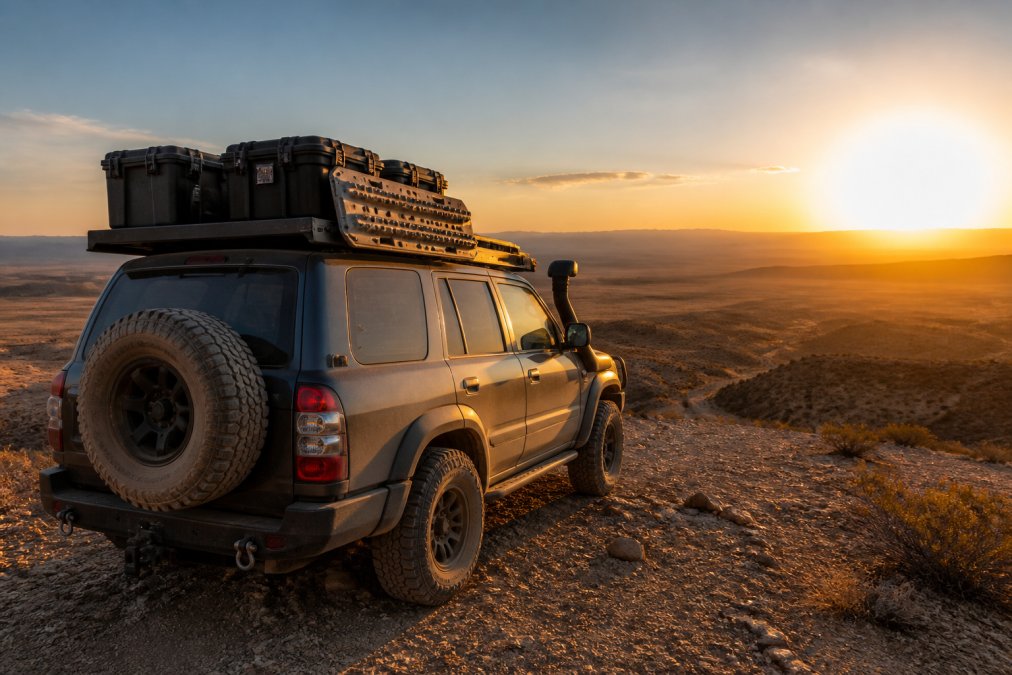
Reliable Camping Gear for Overlanders: Our Selection Method
Selecting the right reliable camping gear requires a disciplined approach that goes beyond reading marketing claims or trusting a single brand name. Our method at OverlandRetail.com starts with evaluating the construction materials and manufacturing standards, favoring full-tang knives, high-density polyethylene plastics, and aircraft-grade aluminum over cheaper alternatives. We then consider how the item performs in real-world conditions, including extreme temperatures, heavy rain, and the constant vibration of a vehicle traveling over rough terrain.
We also weigh the gear's repairability and the availability of replacement parts, since a product that cannot be fixed in the field is a liability on a long trip. Field testing and community feedback from experienced overlanders play a significant role in our curation, as does the item's weight and packed size relative to your vehicle's payload capacity. The result is a shortlist of gear that offers the best balance of durability, function, and value, ensuring you are not paying a premium for a brand name alone.
Essential Overlanding Gear Checklist 2026: The Core Systems
Building your essential overlanding gear checklist 2026 starts with organizing your kit into core systems that cover safety, sustenance, and shelter. This modular approach prevents you from forgetting critical items and makes packing more efficient, as each system has a designated place in your vehicle. The primary categories are vehicle recovery and self-rescue, navigation and communication, the camp kitchen, sleep systems, and storage, with first-aid and emergency preparedness woven throughout.
Each system must be evaluated for its role in your specific trip, as a weekend trip in the desert demands different gear than a two-week expedition in the mountains. A good practice is to lay out all your gear before a trip and physically check each item, confirming it is functional, clean, and that you remember how to use it. This pre-trip audit is a cornerstone of emergency preparedness and prevents the frustration of discovering a dead battery or a broken stove at camp.
Vehicle Recovery and Self-Rescue
Your vehicle is your lifeline, so having the tools to extract it from mud, sand, or a ditch is non-negotiable for off-road travel. A set of traction boards, a sturdy recovery strap, and a shovel form the core of a self-rescue kit, allowing you to solve most common stuck situations without outside help. You should also carry a tire plug kit and a reliable air compressor, since a punctured tire is the most frequent cause of being stranded in the backcountry.
A full-size spare tire is essential, and you should verify that your jack can lift your vehicle when it is fully loaded with gear (osha.gov). Practice using your recovery equipment in a safe area before you need it, as fumbling with a strap or jack under pressure can lead to injury. The goal is to make self-rescue a straightforward process, not a learning experience that happens when you are already stressed and far from help.
| Recovery Scenario | Primary Tool | Backup Tool | Key Skill |
|---|---|---|---|
| Stuck in sand or mud | Traction boards | Shovel | Digging out wheels |
| Flat tire on trail | Full-size spare | Tire plug kit & compressor | Safe jacking points |
| Vehicle in a ditch | Recovery strap | Winch (if equipped) | Proper strap attachment |
Navigation, Communication, and Power
Getting lost is a genuine risk in remote areas where trails are unmarked and cell service is nonexistent, so redundant navigation is a must. A dedicated GPS unit or a reliable mapping app on a tablet should be your primary tool, with paper maps and a compass as a backup that does not depend on batteries. Informing someone of your route and expected return time is a critical safety step that many overlanders overlook.
Communication gear, such as a satellite messenger or a two-way radio, is essential for contacting help in an emergency, and it is worth the investment for the peace of mind it provides. Powering these devices requires a strong electrical setup, including a portable power station or a dual-battery system in your vehicle. Solar panels can supplement your power supply on longer trips, but you should not rely on them as your only source, as cloudy days will limit their output.
Durable Off-Road Recovery Kits: What Actually Works
The market is full of durable off-road recovery kits, but many contain flimsy components that fail under the extreme forces of a vehicle recovery. A quality recovery kit should include a kinetic recovery rope, which stretches to store energy and gently pulls a vehicle free, rather than a static strap that can snap violently. You also need a pair of heavy-duty shackles rated for a load greater than your vehicle's weight, along with a recovery damper to absorb energy if something breaks.
When evaluating recovery gear, pay attention to the breaking strength ratings and look for products with clear labeling and certification from recognized standards bodies. A common mistake is purchasing a kit with a recovery strap that is too short or too weak for your vehicle's weight, which renders it useless in a real situation. Investing in a few high-quality pieces from a trusted supplier is more effective than buying a large kit filled with marginal components.
Must-Have Camping Kitchen Gear for Overlanders
A well-organized camp kitchen transforms meal preparation from a chore into a highlight of the day, but it requires gear that is durable and compact. The foundation of a good kitchen is a reliable two-burner stove that can handle wind and high altitude, along with a sturdy cookware set that nests together to save space. A durable, insulated cooler or a 12-volt fridge is essential for keeping food safe, and its power draw should be factored into your electrical system planning.
Must-have camping kitchen gear for overlanders also includes a strong table for food prep, a sharp knife for cooking and camp chores, and a water filtration system to ensure a safe supply. You will need a way to wash dishes that minimizes water use, such as a collapsible sink or a spray bottle system, and a method for securely storing food away from wildlife. A practical tip is to pre-plan your meals and pack ingredients in reusable containers to reduce waste and make cooking faster at camp.
Sleep Systems and Shelter: Rest That Rebuilds
Quality sleep is a force multiplier on an overlanding trip, directly affecting your energy, mood, and decision-making ability the next day. Your shelter choice, whether a rooftop tent, a ground tent, or a vehicle-based setup, must be appropriate for the climate and easy to set up in the dark or bad weather. A high-quality sleeping pad is more important than an expensive sleeping bag, as it provides insulation from the cold ground and comfort for your body.
Storage and Organization: Weight Distribution Matters
Proper storage is not just about keeping your vehicle tidy; it is a critical safety issue that affects your vehicle's handling and your ability to access gear quickly. Every item you carry should be secured to prevent it from becoming a projectile in an accident or during aggressive off-road maneuvers. The goal is to keep the center of gravity as low as possible, storing heavy items like recovery gear and tools on the floor or low in your cargo area.
Modular storage systems offer a reliable way to organize gear into labeled, stackable units. These cases protect your equipment from dust and moisture, which is vital for keeping electronics and clothing functional in harsh environments. When loading your vehicle, consider the weight distribution from side to side and front to back, as an overloaded rear axle can compromise your steering and braking.
| Storage Option | Best For | Key Feature | Weight Consideration |
|---|---|---|---|
| Front Runner Wolf Pack Pro | Budget-friendly organization | Interlocking, stackable corners | Lightweight, easy to handle |
| Dometic Recon 41L | Protecting sensitive gear | Impact-resistant, gasket seal | Heavier, more strong build |
| CLIQ Chairs | Maximizing cargo space | Folds to bottle size | Minimal storage footprint |
Field Maintenance: Repair Gear Before It Fails
The ability to repair your gear in the field is a defining skill of a self-sufficient overlander, and it requires carrying a small kit of essential supplies. Your maintenance kit should include a multi-tool, a small roll of duct tape, heavy-duty thread and needles, and a tube of high-strength adhesive for fabric and plastic repairs. A compact sewing kit can fix a torn sleeping bag or tent mesh, while a spare hose clamp can be a temporary fix for a broken awning or exhaust component.
Regular maintenance before a trip is just as important as having repair supplies, so inspect all zippers, seams, and straps for wear and address issues at home. A common mistake is ignoring a small tear or a loose bolt, which can quickly become a major failure when subjected to the vibration of off-road travel. By adopting a mindset of proactive maintenance and carrying the tools to make emergency repairs, you extend the life of your gear and ensure it is ready for the next adventure.
Choosing the right equipment is an investment in your safety and the quality of your experiences. The challenge is filtering through the noise to find gear that is genuinely trail-ready, which is why OverlandRetail.com curates only durable, field-tested products for 4x4, off-road, and overlanding use. Our focus on specialized gear and high-quality construction, backed by free shipping and returns, ensures you can explore further with confidence. Get started with OverlandRetail.com and build a kit that is ready for the road less traveled.
Frequently Asked Questions
What is the most reliable camping gear for overlanding?
The most reliable camping gear for overlanding focuses on systems that are field-repairable and built from proven materials. Look for items like full-tang knives, high-density polyethylene storage cases, and self-inflating foam sleeping pads. Avoid gear with complex electronics that cannot be fixed trailside. Prioritize equipment from specialists who test in harsh conditions over generalist brands. A simple, durable design you can maintain yourself will always outperform a feature-heavy product that fails when you are hours from help.
What is the most forgotten item when camping for overlanders?
A tire plug kit and a reliable air compressor are the most forgotten items. Overlanders focus on traction boards and jacks, but a sidewall puncture from a sharp rock is far more common than getting stuck in mud. A plug kit lets you repair the tire, and a compressor reinflates it to get you to the next town. This small kit weighs under two pounds and fits in a storage case. It is the difference between a 20-minute fix and a multi-hour recovery wait.
How do I choose durable gear for long-term overlanding?
Evaluate gear on three criteria: material thickness, repairability, and community track record. For storage, high-density polyethylene resists cracking in freezing temperatures better than polypropylene. For shelter, look for fabrics with a high denier count and taped seams. Check overlanding forums for long-term ownership reports before buying. Avoid gear with proprietary parts that are hard to source. The most durable gear has a simple design, uses standard fasteners, and has been in production for years without major redesigns.
What is the best overland gear for 2026?
The best overland gear for 2026 emphasizes modularity and power management. Look for stackable storage cases with interlocking corners, 270-degree awnings with integrated LED lighting, and dual-zone portable fridges. Power stations with LiFePO4 batteries are becoming standard because they charge faster and last longer than older lithium-ion cells. For sleep systems, hybrid mattresses that combine foam and air chambers offer the best comfort-to-packed-size ratio. The trend is toward gear that serves multiple functions, such as a camp table that doubles as a cooking surface.